Ghost in the Machine (2026) Film review
How would you describe “intelligence”? Would you know it if you saw it? Do you think of figures such as Albert Einstein or Jeopardy champion Amy Schnieder when you ask yourself that question? Do you think of a particular range of IQ scores? This is a good time to start critically asking ourselves this question as so-called “artificial intelligence” has rapidly begun to seemingly take over our lives and dinner conversations.
What does it mean to be “intelligent” and who gets to decide that?
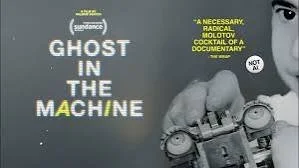
Director Valerie Veatch helps us dig into these questions in her latest film project “Ghost in the Machine” that premiered at the Sundance Film Festival earlier this year. I rented the film on Kinema and this post serves as my review (because if you know me, you know I have plenty of opinions on so-called “AI”).
Many have already asserted that “artificial intelligence” is a marketing term, and historians have reminded us that the term itself was arbitrarily chosen as early as the 1950s to loosely describe science and engineering pursuits of intelligence.
This documentary film helps the audience connect the dots from a history of artificial intelligence’s “scientific racism” to present-day, and possible future, of eugenics that is interwoven with capitalism, misogyny, and racism. She draws from interviews with many well-known and respected historians, computer scientists, social scientists, and tech critics to trace this history as well as to compile a trajectory of how certain, wealthy AI industry heads who make up this current Project of AI (Altman, Musk, Zuckerberg) have spent their time, money, resources into pushing for the AI infrastructure we see today.
While the primary context for the film of the present state of AI is the States, the film takes an international turn to highlight much of the human-involved work that keeps AI seeming as if it were actually autonomous and intelligent.
Exploited data workers are globally-situated, but overwhelmingly hired in less developed economies where they often earn low wages in return for long hours, in dire conditions, and doing essential work, such as content moderation, for Big Tech firms. Although this isn’t necessarily new information for those who have remained skeptical of Big Tech over the years and as these instances have been reported on increasingly, I do think it is important to continue sharing these stories until conditions change and also to pull back the curtain as to how Big Tech AI functions under the guise of autonomy. In the film, we hear directly from some of these exploited workers on the lack of promise in opportunity for jobs and also how content moderation of violent images they see on a daily basis sticks with them long after exposure and continues to impact their lives negatively.
However, I hope these people were properly compensated and provided with protections for their time on film, as they may risk being further reprimanded for speaking out. I also worry that we are continuing to exploit them as they tell us these stories and we take little action on these atrocities.
There were some other aspects of the film that didn’t sit well with me.
Throughout the film, a small “not AI” was glued to the top right of the screen, presumably to let the audience know what was being shown was, indeed, not AI-generated. However, my brain quickly disregarded this, and it was only after watching it a second time that I noticed some of it was actually “AI” and the disclaimer switched to notify us of that. But I didn’t notice. Maybe that was the point? That AI-generated content has become increasingly difficult to tell apart from non-AI generated content. The use of the disclaimer, when I noticed it, made a bit more sense to me after I made this realization as some scenes that featured red Koolaid seemed out of place and almost unnecessary. Clips at the beginning of the film that anthropomorphized Tay, the 2016 Twitter AI-chatbot, also looked eerie and out of place to me. Given the final recommendations of the film, I wish Veatch would have opted to not use AI at all. I think it would have made a bigger impact to pay and use an animator for these scenes and to emphasize how unnecessary AI is, especially in creative industries.
Speaking of the final recommendations of the film (SPOILER ALERT), for me, it felt short and ended abruptly with very little hope even though I think it was trying to offer audiences hope. Ultimately, the recommendations from the film on what we can and should do with this understanding of The Project of AI’s history and present-day indulgence of capitalism, racism, and misogyny, are to resist AI at an individual level and to not use it. But I don’t think that placing the burden on individuals is going to help much and it seems daunting and unrealistic when we still exist in capitalist, ableist, white supremacist societies. Not using AI (and I’m assuming it’s primarily talking about generative forms of AI, but this was also unclear) at all is becoming pragmatically harder to achieve. But we can make concerted choices and efforts in why we are using certain AI technologies and what benefits it serves.
A more indirect recommendation I took from this that I did like and wish was emphasized more, is one that asks us to think about what kinds of futures we want and whether it aligns with the future these eugenicists see for us (probably not) and then to collectively come together as part of a resistance and collective action for better futures.
I’m curious as to what types of people will actually be drawn to watch this film. Overall, I think the film is meant for those who already give so-called “AI” a big ol’ side eye of skepticism.

So, perhaps then, on the ground, in our everyday, maybe hope could look like sharing these ideas with our friends and family who have fallen under AI-hype, helping them understand what these technologies are, where they come from to better understanding what its limits are, and to get us all making more informed choices instead of blindly and uncritically using AI because it is easy, available, and “inevitable” (it doesn’t have to be).
If you are interested in reading more on this topic of eugenics and “AI”, I highly recommend this piece published in 2024 by Timnit Gebru and Emile P. Torres, “The TESCREAL bundle: Eugenics and the promise of utopia through artificial general intelligence”, although it’s written for primarily an academic audience.
I will leave you with lyrics from Sza and Phoebe Bridgers song “Ghost in the Machine” that was not at all used in the film being reviewed, but that I think is completely relevant:
I need humanity
Y'all lack humanity, drowning in vanity
Craving humanity
Y'all lack humanity, I need humanity
---
I hope you enjoyed this film review. I do not have a film background, but I do have a lot to say about so-called “AI”, so please forgive my avoidance of particular film techniques such as the random-seeming voice-overs that were used in some parts of the film (maybe it’s the ghost that’s referred to in the title???)
What did you think of the film? What did you take away from it and what will you leave behind? Let me know.
Is it me? Or is it You(Tube)?
Cross-posted from my blog series at the ALiGN Media Lab (in case that disappears…)
Originally published on February 15, 2019.
At the end of 2018, popular Canadian YouTube vlogger, Lilly Singh, otherwise known as her YouTube personality, Superwoman, posted a short video to her 14 million subscribers sharing her reasons for leaving the platform that grew her success as a comedian and artist.
In her video, she cites a few other YouTubers who have been also left the platform that inspired her to take a break as well. Singh prioritizes her own mental health and creativity as reasons why she wanted to take a break. She explains that YouTube’s platform and community pressure her to continuously pump out video content in order to keep herself visible on the platform and therefore successful with a hefty income. In fact, Singh was one of the highest earning YouTubers in 2016 and named a Top Entertainment Influencer by Forbes in 2017, reportedly earning $10.5 million last year.
This drop of YouTube influencers from the platform has come to my attention as a few of my favourites have posted similar YouTube videos about their leaving, often citing taking a break for mental health reasons, and/or to find the creativity that once shone on their videos.
YouTube’s monetization of content works primarily through advertisements. Once a community of engaged audience has been established on one’s channel (with at least 1000 subscribers) and there is a steady stream of videos, one can apply to serve advertisements on the channel. Creators also make money by partnering with big brands once they hit a high number of subscribers and views on their videos. In order to gain and maintain a high number of subscribers, vloggers need to create and post short and interesting content regularly to keep their videos on YouTube’s home page’s and at the top of search results.
Mental Health Narratives and YouTube’s Changing Policies
What struck me was how Singh specifically says that her leaving is not about YouTube, and yet as she continued on about her reasons to leave, she states that part of it is because of how YouTube’s platform and policies have changed since she started creating and sharing videos 8 years ago. She explains that she no longer understands how the changes are working and affecting her content. Her confessional-style video assures her community, however, that she will be back. She is using her break time from YouTube to focus on other creative endeavors that have come out of her becoming famous from her online videos (a budding music and acting career). She hopes to return to the platform happier and with a clearer understanding of posting content on YouTube. Her video was short, confessional post letting her subscribers and community know what’s happening with her.
Somewhat similarly, make-up YouTube guru Michelle Phan created a video about leaving YouTube in 2016. Unlike the simplistic, confessional-style of Singh’s though, Phan’s video is an animated, narrative-style video in which she explains to her community why she already left the platform. Phan tells more the story of why she was first drawn to the YouTube community as a creative person and the success that came with it pulled her into becoming someone she could barely recognize after 10 years uploading content to the platform.
Phan discusses mental health issues she was facing as she worked to create content and the more visible she became, the more was demanded from her (she was undergoing multiple lawsuits the year she left the platform). She describes how YouTube’s platform and community pushed her to curate a particular image of herself she was increasingly unhappy with although, this image brought her money, fame, leading her to opportunities to participate in other major creative projects, including the launch her own makeup line. However, Phan abandoned all of her social media, traveling the world only to return to YouTube and her social media a year later when she rebranded her failed Em cosmetics brand.
Could This Be Clickbait?
But other famous YouTube creators have threatened to leave the platform and been accused of producing clickbait with such uploads. Clickbait refers to headlines of content that that is deceptive and misleading encouraging people to click on the content to read or find out more information. For instance, one of YouTube’s highest-earning vloggers, PewDiewPie, also known as Swedish’s Felix Kjellberg, left YouTube in 2016 also citing the changes in YouTube’s policies and algorithms. But he returned shortly after, where his actions were called out as being clickbait. Last month, Kjellberg’s fiance, Marzia Bisognin, a lifestyle YouTube-r posted a video about saying goodbye to YouTube. Likewise, Kjellberg has threatened yet again to delete his YouTube platform while many suspect this is yet another clickbait project.
So what’s going on, YouTube? I thought YouTube was supposed to be a platform in which voices of all kinds can escape the gatekeepers of traditional content outlets so that all niches of communities can express themselves (as long as they have a little bit of technical know-how to record and upload their content as a video). It seems that the changes of YouTube since its beginnings is impacted those influencers that figured out how the platform could work for them by helping them grow their visibility, their influence, and ultimately the money that they make through such content.
We should be paying attention to how influencers from years ago are keeping up with platform changes to continue the success they began with on the YouTube. YouTube, of course, does not share much information about how its algorithms make decisions regarding how videos move up and down result pages, but these cases shed some light on how that works. In some cases, the consequence can also be frightening.
Unintended Consequences
Earlier in 2018, YouTuber, Nasim Najafi Aghdam, became increasingly upset with the changes of YouTube that caused her videos to be filtered and censored, thereby impacted her ability to retain subscribers and make money as she was already used to on the platform. On April 4th, 2018 Aghdam entered the YouTube headquarters in San Bruno, California with a loaded gun shooting three employees before shooting herself.
This trend of once highly influential YouTubers now concerned about their role with YouTube’s platform in pushing for and curating certain content to constantly keep up with being influential could indicate how YouTube’s changes prioritize a different or a new kind of influencer – not one that relies on the tools and features from the close past to increase their visibility and influence.
Last month, only two months since her “see you later” video, Singh returns and relaunches her YouTube channel. In one video, she explains to her subscribers how her channel will change from how she created and delivered content from the beginning – uploading video not on a schedule as it once was, and only topics that excite her, not ones especially curated to gain and retain subscribers (and revenue).
What do you think about these confessional-style YouTube videos about leaving YouTube? How have you seen your favourite YouTuber’s content, style, and personal well-being change over time? To what extent is YouTube responsible for the mental health issues that many of the YouTuber’s are currently dealing with? And to what extent could all this just be clickbait, perhaps a desperate act of gaining more subscribers and increasing their visibility once again through a rebrand?
Exploring the Dark Web: TOR for Activism
Cross-posted from my blog series at the ALiGN Media Lab (in case that disappears…)
Originally published on February 5, 2019.
The Tor browser – often mistaken as being the “dark net” itself and seen as being synonymous with illegal or nefarious activities – has become a useful platform for activists who require privacy and anonymity, and one has been attracting increasing attention from activists and citizens alike in recent years. Tor is being seen as a potential tool for ensuring privacy in a world where the online activity of both activists and even everyday citizens are being closely monitored by corporate and state interests.
SURVEILLANCE TECHNOLOGIES AGAINST ACTIVISTS
Many activists now rely on social media platforms, such as Facebook, Twitter, Instagram, YouTube, to organize and mobilize for their cause. These platforms are widely relied upon by activists because of the low barrier to access, the potential to reach the millions of users locally and globally, and because they can be used to document protests and initiatives. As it turns out, these platforms are also heavily used by governments to monitor activists.
The use of surveillance tactics and technologies by police and governments to monitor everyday citizens has become increasingly commonplace1 since the attacks of September 11, 2001 (Taylor, 2011). This phenomenon of increasing state surveillance coincides with a period of significant political and civic mobilization and action – including the Idle No More, Occupy Wall Street, and Black Lives Matter movements – and with the development and widespread global adoption of digital technologies, including personal computers, smart phones and social media platforms.
Journalists have reported that the Department of Homeland Security consistently collected information of those attending protests from their social media platforms2, such as Facebook events set up to promote the protests, Twitter hashtags, Instagram and Vine feeds. Furthermore, journalists or everyday citizens taking photos of protests who post them on social media are providing further data for police to identify and surveil activists. The goal for these surveillance tactics over social media platforms were reportedly to “disrupt potential violence” (Patterson, 2017). However, as VICE points out, even without tagging an individual, Facebook uses a facial recognition algorithm that can identify people from facial images, putting everyone’s privacy at risk (Rogers, 2016).
Social media platforms are not neutral, open spaces and it’s clear that corporate interests do not align with activists needs. Social media design and policies are also often in tension with activist social media goals and needs (Dencik & Leistert, 2015; Van Dijck, 2013; Youmans & Work, 2012). While social media technologies “serve as venues for the shared expression of dissent, dissemination of information, and collective action” (Youmans & York, 2012, p. 315), the primary objective of social media companies, many of which are publicly traded companies and have fiduciary obligations to shareholders, is generating profit through advertising. Business models of these companies are built upon the mining of personal data about users, and keeping those users online as long as possible (Leistert, 2015).
TOR AS AN ALTERNATIVE AND SECURE BROWSER
The Tor browser provides an online alternative, allowing activists who have some technological know-how to use the browser as a means of organizing and mobilizing while remaining anonymous. Tor addresses concerns about privacy by letting activists encrypt their messages to one another, thereby making it difficult to find out who is sending messages to whom. Tor masks your IP address (which identifies your location and then your potential identity) to prevent it from be used by governments to censor parts of the web. In this case Tor acts similar to a VPN but is volunteer-run, not subject to subpoenas, and does not keep logs of user traffic. For a VICE special on how to not get hacked, Jeong (2017) identifies major reasons why people would want to use the Tor browser. These are: trying to hide your identity, using public Wi-Fi, avoiding government censorship, and/or protecting other users of Tor as Tor becomes stronger the more people use it.
Although the Tor platform is often associated with the “dark web” based on the “darker” acts that occur using such encrypted communication technologies, as discussed in other parts of this issue, the anonymity of Tor has human rights and social justice implications. The “dark web” is often associated with the dangers that stem from its applicability for “dark” purposes such as criminal activity, buying and selling deadly weapons, illegal drugs, child pornography, ISIS communication, and White Supremacist communication. But the privacy and encryption offered by Tor are not just useful for criminal masterminds. These darker aspects are just a small percentage of what takes place on Tor. In response to Neo-Nazis turning to Tor for their continued mobilization (Hern 2017), leaders from the Tor Project explained:
Tor is neither “good” or “bad” just like the rest of the internet, however, what’s important here is in how it is being used, who has access to this knowledge and who is often left out of the positive potentials of being anonymous online. As Jardine (2015) shows, the technology of the Tor platform can be used for both “darker” activities but also for democratic purposes. Data collected from Tor’s network from 2011 and 2013 from over 157 countries demonstrate that although political repression drives most of Tor’s usage (Jardine, 2018), in 2015, for instance, with over 2.5 millions users on Tor, only 40% of Tor’s browser was used for nefarious purposes while 60% wasn’t.
The anonymity of Tor provides users the benefits of organizing and communicating online with some safety from surveillance. The benefits of TOR are especially useful for those in countries with repressive governments that limit secure and private Internet access, and for those for journalists and activists to blow the whistle on corruption (Jardine, 2015). Examples of groups using these won’t be that many because the whole point is for them to remain to be private. However, reporters have identified that Black Lives Matter activists moved over to using Signal and Tor to maintain privacy amongst the activists (Altman, 2015).
Tor, is, of course, not completely free from the risk of data and privacy breaches. There have been reports of security hacks and infiltration from the state and police that are concerning. Tor is left vulnerable through “weak links” in the computer network that is potentially logging more traffic that the node should be (Tor is hosted by volunteer computer nodes). This was how investigators were able to infiltrate ISIS communications (Roe, 2014). Police have also reportedly entered known child pornography forums, gathering information as a pretend pedophile. The FBI has also reportedly developed and used an application called Metasploit to identify users hiding behind Tor’s browser (Poulsen, 2014).
But for now, Tor is still the better option than relying on VPNs, using WhatsApp Messenger for end-to-end encryption of messages, or even Signal, another popular application used for encryption and privacy while accessing and sharing online content (Jeong, 2017). The issues with many of these aforementioned applications in comparison to Tor is that they retain some metadata and, just like Facebook and Twitter, comply with data requests and court orders from government and local police authorities.
THE TOR PROJECT
Because the Tor browser is funded through the US government and military but run completely by volunteers, it’s hard to say how long the browser will survive given the trend of increasing state surveillance. And as more activists turn to Tor, technical limitations could pose challenges, including the need to handle the uptake of users while ensuring enough volunteer computers are in place to keep traffic secure.
The TOR Project, a non-profit organization that maintains the Tor software, is one example of a current initiative to expand Tor to everyone, beyond the criminal masterminds and spies that we often think of lurking in the dark depths of the Internet. The Tor Project wants everyone to be using it, so this shows us its capabilities as more than just a space where evil lurks. Using Tor effectively still requires technical know-how and access to the Internet, and in countries with repressive governments, such access to Tor may be hard to penetrate.
Donating to the Tor project, which began soliciting crowdfunding in 2015 (Russell, 2016), or becoming an active relay for computer nodes, are just a few ways to help ensure that the present and future of internet privacy is maintained for some of us until more of us demand action from our current browser and social media owners and more transparency from our governments in their interactions with them.
LESSONS FOR EVERYONE ELSE
Corporate online surveillance is not just an issue that active protestors now need to worry about, but something that so many more of us are affected by in various ways. Recently, the report of Facebook’s secret Cambridge Analytica scandal has fuelled the fire that non-consensual surveillance of users is common place (Chang, 2018). While the outing of such research studies has been a catalyst for improvement, with social media companies taking a more meaningful approach to educating users about privacy (Facebook and recent privacy notifications and suggestions to improve your privacy settings), users’ data is still at risk given the legal authority of government authorities to access data through court order or through surveillance of digital technologies by agencies responsible for protecting national security.
Privacy is important for everyone who engages with online and networked forms of communication. Platforms like Tor help us to maintain our privacy to some extents. For activists engaged in social justice, this could provide a more secure way to organize and mobilize.
Works Cited:
Altman, A. (2015). “Person of the year, the short list: Black Lives Matter.” In Time Magazine. Retrieved from http://time.com/time-person-of-the-year-2015-runner-up-black-lives-matter/
Chang, A. (May 2, 2018). “The Facebook and Cambridge Analytica scandal, explained with a simple diagram.” In Vox. Retrieved from https://www.vox.com/policy-and-politics/2018/3/23/17151916/facebook-cambridge-analytica-trump-diagram
Dencik, L. & Leistert, O. (2015). Critical perspectives on Social Media and Protest: Between Control and Emancipation. Maryland: Rowman & Littlefield International.
Hern. A. (Aug 23, 2017). “The dilemma of the dark web: Protecting neo-Nazis and dissidents alike.” In The Guardian. Retrieved from https://www.theguardian.com/technology/2017/aug/23/dark-web-neo-nazis-tor-dissidents-white-supremacists-criminals-paedophile-rings
Igo, S. (Apr 10, 2018). “How you helped create the crisis in private data.” In The Conversation. Retrieved from https://theconversation.com/how-you-helped-create-the-crisis-in-private-data-94633
Jardine, E. (2015). “The Dark Web dilemma: Tor, anonymity and online policing.” Global Commission on Internet Governance Paper Series, No. 21. Retrieved from SSRN: https://ssrn.com/abstract=2667711 or http://dx.doi.org/10.2139/ssrn.2667711
Jardine, E. (2018). “Tor, what is it good for? Political repression and the use of online anonymity-granting technologies.” New Media & Society, 20(2), 435-452. Retrieved from https://journals.sagepub.com/doi/pdf/10.1177/1461444816639976
Jeong, S. (Nov 27, 2017). “The Motherboard guide to avoiding state surveillance.” In Motherboard by VICE. Retrieved from https://motherboard.vice.com/en_us/article/a37m4g/the-motherboard-guide-to-avoiding-state-surveillance-privacy-guide
Leistert, O. (2015). “The revolution will not be liked: On the systemic constraints of corporate social media platforms for protests.” In L. Dencik and O. Leistert (Eds.) Critical perspectives on social media and protest: Between control and emancipation. Maryland: Rowman and Littlefield.
Patterson, B. E. (Oct 19, 2017). “Police spied on New York Black Lives Matter group, internal police documents show”. In Mother Jones. Retrieved from https://www.motherjones.com/crime-justice/2017/10/police-spied-on-new-york-black-lives-matter-group-internal-police-documents-show/
Poulsen, K. (Dec 16, 2014). “The FBI used the web’s favorite hacking tool to unmask TOR users.” In Wired. Retrieved from https://www.wired.com/2014/12/fbi-metasploit-tor/
Roe, K. (Nov 5, 2014). “Meet TOR: The misunderstood gateway into the Dark Web.” In The Bottom Line. Retrieved from https://thebottomline.as.ucsb.edu/2014/11/meet-tor-the-misunderstood-gateway-into-the-dark-web
Rogers, K. (Feb 7, 2016). “That time the Super Bowl secretly used facial recognition software on fans”. In Motherboard by VICE. Retrieved from https://motherboard.vice.com/en_us/article/kb78de/that-time-the-super-bowl-secretly-used-facial-recognition-software-on-fans
Russell, J. (2016). “TOR turns to crowdfunding to lessen its dependence on government money.” In Techcrunch. Retrieved from https://techcrunch.com/2015/11/24/tor-turns-to-crowdfunding-to-lessen-its-dependence-on-government-money/
Taylor, A. (Sept 8, 2011). “9/11 The day of the attacks”. In The Atlantic. Retrieved from https://www.theatlantic.com/photo/2011/09/911-the-day-of-the-attacks/100143/
Tor Project. (n.d.). “Tor project.” Retrieved from https://www.torproject.org/
van Dijck, J. (2013). The culture of connectivity: A critical history of social media. Oxford: Oxford University Press.
Youmans, W. L., & York, J. C. (2012). “Social media and the activist toolkit: User agreements, corporate interests, and the information infrastructure of modern social movements.” Journal of Communication, 62, 315–329. Retrieved from https://deepblue.lib.umich.edu/bitstream/handle/2027.42/91171/j.1460-2466.2012.01636.x.pdf?sequence=1&isAllowed=y
I’m burning for a Silicon Valley revolution!
Cross-posted from my blog series at the ALiGN Media Lab (in case that disappears…)
Originally published on November 1, 2018.
It’s time to stop the culture of online harassment and “networked misogyny” (because let’s face it, these online attacks are disproportionately gendered). While increasing the number of women in leadership roles is a necessary condition for effecting cultural change, it is by no means sufficient. Assuming we want to foster diversity and inclusiveness in the workplace, having more women and minorities in leadership positions is just common sense. However, it is less clear how this diversity trickles down to those responsible for developing online technologies. Although there are many programs and initiatives to get more women and girls into the boardroom and into the computer science classroom, are we just training some women and girls to be more like the men who dominate and run Silicon Valley? Or are we actually pushing for a cultural change in Silicon Valley?
For many, Sheryl Sandberg is a symbol of Silicon Valley feminism. Sandberg has become infamous for her Lean In philosophy, which presents feminism in an easily digestible format and is directed at those already in corporate high positions. Sandberg’s idea of feminism gives us quick, clear solutions and encourages women to work the system for their benefit rather than try to change it for the benefit of everyone else. It does not account for the way women have learned to lean back where men have been encouraged to lean in. As Bell Hooks’ bright critique of the Lean In philosophy, who are the men that she wants to be equal with? And where is the discussion of a movement to end sexist oppression that infiltrates these toxic technocultures? Sandberg’s feminism only really affects the woman who wants to lean in, not so much for anyone else. Corporate feminism benefits those in power still.
But a revolution is about changing the system so that other women and marginalized folks, those who are disproportionately misrepresented in the tech culture, can benefit, as opposed to an individual approach that privileges the power and status many (white) women in tech benefit from. I want more Ellen Pao and less Sheryl Sandberg.
Ellen Pao flipped the table in Silicon Valley beginning with the widespread coverage of her $16 million lawsuit of gender discrimination and sexual harassment against former employer Kleiner Perkins Caulfield and Byers. Her push for change was to help all women, not just herself. Pao’s actions affected all those around her. Her trial cost her and employer money and positive reputations in Silicon Valley. During her time as CEO of reddit, she dismantled salary negotiations to combat gender pay equality, was the public face of the company’s anti-harassment policies, and managed to shake up Silicon Valley despite the significant resistance she faced by the reddit community. While Pao battled in court against Kleiner Perkins Caulfield and Byers, female employees from Twitter and Facebook also filed lawsuits for gender, racial and sexual harassment. Following the lawsuit, a group of women and men in tech took out a full page ad in the Palo Alto Daily thanking Ellen Pao for her work to help bring other women up.
I don’t want to compare women or pin two ideas of feminism against each other – that’s not productive. Instead, my goal is to continue being critical and to pivot our understanding of the women in tech problem by paying attention to those people who have dared to make structural changes to benefit other women. Said differently, not one type of feminism is more “legitimate” than another, though the iterations less likely to affect cultural change (e.g., Lean In) have to date been better received by mainstream media and to the tech culture.
Making space for women and minorities on the internet is so important, although we can’t just add women of color and feminists to top spots “and stir.” There are many people who benefit from keeping these spaces as they are, and at times, those voices are still stronger and louder than ours.
Re-Worlding by Re-Wording
Cross-posted from my blog series at the ALiGN Media Lab (in case that disappears…)
Originally published on September 30, 2018.
Although “speculative fiction” is sometimes used as a catch-all term that includes fantasy, science fiction, horror, and superhero literature, Margaret Atwood identifies speculative and science fiction as different genres. While science fiction, according to Atwood, “has monsters and spaceships”, speculative fiction is about things that “could really happen”. We can find speculative fiction in many contemporary forms of popular culture, in podcasts (e.g. FlashForward), movies and tv shows (e.g. Black Mirror), and books (e.g. Handmaid’s Tale and Parable of the Sower), to name only a few. I contend that speculative fiction has a role that goes beyond entertainment purposes. It can be used to reimagine online spaces as inclusive spaces for women and minorities as academics and activists.
Academic scholars such as Sarah Kember and Donna Haraway have discussed the role that writing plays in world-building for academic use especially through irony and parody. I have recently read Kember’s book iMedia: The Gendering of Objects, Environments and Smart Materials and was struck by her intertwining of speculative fiction with her work on the gendering of smart objects and technologies like Google Glass and smartphones. By doing so, she has turned writing to what she describes as “a mode of reinventing the world without having to affirm or deny it.”
Community activists, inspired by Octavia’s Brood, have also dabbled in speculative fiction writing. Through short fiction stories, these activists have tried to build new ways of thinking and new imaginings around current issues facing their communities.
From these works, I gather that speculative fiction is more of a way to engage in and be reflexive to draw out our imaginations to re-world; it’s not as much as convincing other people that our world will come about. It is about bringing forth possibilities based on our reflections and experiences and of what we want out of our world and to draw attention to this.
Speculative fiction in my own practice:
My colleagues and I worked last year with speculating futures, fictions and designs on topics of interest to us. It was useful for me to be able to think beyond the apps that exist today in order to think about new apps to potentially make new worlds tomorrow. I used speculative fiction to help me think through a speculative design of apps that could be useful for women who experience violence. We can’t just look at the technology in isolation but rather at its entanglements with behaviours and culture
Below is an excerpt of my speculative fiction, inspired by Sarah Kember’s use of writing fiction around technology alongside her theoretical ideas. I created my imagined future of a Canada free of online harassment. This example, I hope, illustrates the often overlooked physical effect of experiencing online harassment that has been pushed aside and ignored by tech developers, law enforcement, and news media who continue to reinforce violent behaviours instead of preventing and ending them:
“It’s Friday morning, as you head into the kitchen, grunt a barely comprehensible “good morning” to your family already there waiting for you. “Can I please get extra lunch money for doughnut day?” “Sure, kid” you reply and using just your thoughts, deposit money into your child’s online bank account. As you do so, the child’s dopamine and serotonin levels start to rise, heart rate and breathing rate have increased, and the exact levels of elatedness the child is feeling is transmitted through the microchip you have implanted in your brain to induce an emotional event equivalent to the experience being felt by the child. Both of you, feeling pleasantly content, continue with your day, interacting with others. It’s March already and only a few months since the bio-implants were made mandatory to access the Internet by the Canadian government. As you’re sitting in your self-driving car, you browse through your news feeds being shown through one part of your eye, you come across a photo of a friend of a friend, a woman who looks pretty happy in the photo and a discussion that’s already starting to get a bit heated between the woman in the photo and another friend of hers. You watch for a while, chuckle to yourself, and then decide to jump in with something that would be much more attention-grabbing .. you call her some foul names with your mind, but that’s not really enough, you’re not getting the reaction you want. So you urge others to continue to taunt her, and you share her home address, threaten her and her family and go on until … until the chip in your brain begins to detect how you are causing another person to feel through your interaction. Your bio-integrated social networking induces an emotional trauma equivalent to the levels of trauma the other person is experiencing. The chip in the brain is set up to lock you out of the Internet once you’ve passed the threshold of trauma being inflected and simultaneously experienced. You are locked out until that other person returns back to their neutral state before you had interacted with them, for however long it takes, if it ever even happens.”
I hope to spend more time with speculative fiction in my future work to start rebuilding these online spaces. How do you use or hope to use speculative fiction or design in your academic/activist/community work? Or for yourself?
Living in vs living with media – Networks of online harassment
Cross-posted from my blog series at the ALiGN Media Lab (in case that disappears…)
Originally published on May 19, 2018.
I’m part of a generation that has done much of our growing up with and in media. Living in media in this context means that our lives are heavily mediated by new media; we can make most of our appointments online, order groceries at the touch of the button that will be delivered to our home, ask a computerized personal assistant for bus times, look for our next relationship through online dating sites, and share our daily adventures and mundane-ness with friends and family through our Facebook and Instagram feeds. Not only do many of us go about our everyday life with new media, these are also the many ways into our everyday lives that online harassment can affect us. Thinking of our relationship as living with media, on the other hand, assumes that we can easily separate ourselves from new media, but that’s often not so easy for many people.
In the past year, there have been a number of well-known women who have publicly left Twitter due to the harassment they had to endure on a regular basis and Twitter’s lack of support in these instances, and the overall toxic culture that has taken over Twitter. Jessica Valenti, Leslie Jones and Lindy West are just a few of outspoken women online who abandoned Twitter. In Lindy West’s piece on why she left Twitter, she said she no longer wanted to help it profit as no matter what she did, nothing worked to eliminate the harassment. “I talk back and I am “feeding the trolls”. I say nothing and the harassment escalates. I report threats and I am a “censor”. I use mass-blocking tools to curb abuse and I am abused further for blocking “unfairly”.”
Feminist author, Jessica Valenti posted a number of tweets in July of 2016 stating that she was leaving Twitter because of the death and rape threats targeting not herself, but her 5-year old daughter. Both Valenti and West are writers for the Guardian, typically writing about feminism and politics. The Guardian released a survey of comments on its site that revealed Valenti’s writing was the most targeted with harassment. Leslie Jones, star of the new Ghostbusters remake, was also harassed on Twitter and publicly singled out for a short period of time until the biggest troll of them all was banned on Twitter. This didn’t stop this troll from continuing to lead a huge following of online trolls, signing a $250,000 book deal, and disseminating his own writing that went on to be picked up by mainstream media.
So what other options are there? Because of the networked spaces, we have to think of these platforms as networked connections and not individual platforms that exist in a vacuum from one another. For example, when Anita Sarkeesian, of the popular online series Feminist Frequency, was harassed with death and rape threats, the harassment didn’t stop at Twitter. One harasser created a video game where the purpose is to beat up Anita into a bloody pulp. And because of algorithms, the narratives on Twitter found their way onto the top Google search results when searching for one of these online feminist writers. This is what Sarah Banet-Weiser and Kate Miltner call “networked misogyny”.
Although publicly abandoning platforms like Twitter temporarily bring attention to some of the reasons why some people would want to leave the platform (i.e. abuse, harassment) this doesn’t fix the problem and shouldn’t be the go-to response from others, anyway, telling women online to just leave if it’s getting too much for the to handle. It’s ok to remove yourself from social media and is important for self-care, but the answer to ending online harassment isn’t to simply leave. Online abuse doesn’t stay on one platform – trolls don’t only use Twitter. They can easily find your email addresses, other social media platforms you’re using, and your friends’ social media pages to also spam with abuse.
For many of us, we rely on our use of Twitter and its algorithms to keep our jobs (as freelancers and those in creative industries to use as a space to disseminate our work), to keep up with and make new connections, to find all the cutest cat gifs of the day, and many other activities. We have come to rely on our mediated lives and the ways in which we use these new communication technologies, so leaving or fixing one platform isn’t going to help. A larger culture of ending harassment must be taken up by the plethora of actors involved in the creation and maintenance of these platforms.
In the meantime, Feminist Frequency and some local Ottawa organizations have put together social media safety guides to work on preventing online harassment. These guides are definitely still putting the onus on us to prevent our own harassment. However, perhaps these guides will also be useful to those ready to design their own platforms that can tackle the network of harassment as well.
Where are all the Indigenous languages, Duolingo?
Cross-posted from my blog series at the ALiGN Media Lab (in case that disappears…)
Originally published on April 18, 2018.
Last month, Duolingo – the popular language learning mobile app – released two new languages for their popular language-learning platform: Klingon and High Valeryian. If you have yet heard of these two languages, I won’t hold it against you. After all, Klingon is a fictional language spoken by an alien species in the Star Trek universe and High Valeryian is the popular, again fictionalized, language from the Game of Thrones book and television series.
When Duolingo was released in 2011, the available options were German and Spanish for English-speakers and English for Spanish-speakers. The app is gamified meaning that you learn language through mini games and you earn points for being right. These games can be done one at a time or many in one sitting, affording many types of language-learning activities to play throughout the day, during one sitting a few times a week or just once in a while. You can connect with friends who are also learning the same language to compete against them.
Developed by a Carnegie-Mellon professor, Luis Von Ahn, and a graduate student, as first an academic project, the app was meant to be 100% free, accessible (to those with access to a mobile phone with internet and/or data) and fun – because learning languages, especially English, is expensive. Von Ahn explains that this project began as looking for a way to translate the web into all the major languages for free while at the same time creating a platform where people can learn new languages to further help with the larger project of translating the web. Users learn new languages through game-like courses while simultaneously translating parts of the web into that language. In this way, Von Ahn argues that such a business model allows for the user to be gaining value (learning a new language) while offering a service that they are not losing (providing the translations as they participate in the online course).
The advent of software technology that allows for almost immediate translation is, on the surface, a potentially enfranchising innovation. Software technology has a significant potential to help historically disenfranchised Indigenous Canadians pass on the languages of their people to new generations. In this context, we need to ask whether designers and creators of apps – the ones who shape ways in which we learn languages by controlling what is accessible and free to us – have any social responsibility beyond making learning languages technologically accessible, convenient, and conducive to building a user base and generating ad revenue. To be clear, I don’t think the intention of Duolingo’s designers is to leave out languages; however, recognizing structural and economic forces at play, one cannot help but to consider and question decision-making processes in adopting Klingon over Cree, for instance.
In 2017, Duolingo finally offered Chinese and Japanese languages, their most requested languages. Duolingo employees have stated that some of these languages have been more difficult to translate into a mobile application course, but the demand has pushed the company to work towards adding the courses regardless. Korean, Mandarin, Japanese, Swahili were also added over the last year with the latter being developed in partnership with the Peace Corps. However not all of the languages were added based on the percentage of the population that use the language, as Welsh was added after a personal letter from the Welsh government. Duolingo announced that they would be developing a course for Arabic speakers to learn Germany because of the Syrian Refugee crisis. Even more so, there has been a move to use this education-based app within educational program and it has already been piloted in some schools in the US. It’s no wonder that Apple listed it as iPhone app of the year in 2013 and is currently used by over 170 million smartphone users.
Knowledge of languages holds power because our society values certain languages over others. Was it not for colonialism, English would have not been the dominant, almost universal language used offline and online. So when we interact with technology on an everyday basis, we can only communicate in a few of the most powerful languages, and not even seeing some languages as an option can potentially contribute to these languages becoming extinct. This has been a problem for a long time with Indigenous languages, and especially languages that rely on oral communication, because writing’s permanence makes it easier to stay in flow throughout time and geographic space.
And so, some of the decisions that Duolingo makes reminds us that such mobile apps are first and foremost for-profit apps. Their current business model is supported primarily through advertisements on the app, in-app purchases, paying to have ads discontinued, and paying to complete a certified English test. This is why we are seeing Duolingo more concerned with adding fictional languages to their online course that could potentially bring in broader user base, and thereby increasing their own profits, instead of more of a move to stick with the original idea behind Duolingo of an app being an accessible and free language learning platform for those who wouldn’t have such access otherwise.
The invisibility of Indigenous languages in this popular app reinforces the continued systemic racism against indigenous communities. So let’s keep highlighting this issue and asking for this content until designers listen to how much shaping power they have in today’s society for many people. I would also like to start seeing more new apps entering the language market and making a difference, like the mobile keyboard app, FirstVoices.
Algorithmic trends – A new digital divide with the knowledge of platforms?
Cross-posted from my blog series at the ALiGN Media Lab (in case that disappears…)
Originally published on February 25, 2018.
The digital divide typically refers to the gap between the “have and have-not’s” when it comes to a basic internet connection and access to a personal computer. Eszter Hargittai explains a second-level digital divide as a difference between the internet skill and know-how of the internet user. This second-level digital divide is really a generational divide – unlike us ‘older folk’, recent generations spent their formative years navigating a digitally mediated and connected world. Consequently, youth are commonly assumed to share an affinity for digital technologies. On top of that, the technology we use in our everyday lives is constantly evolving and becoming so much faster.
On March 15th 2017, Instagram – the popular, photo sharing and filtering mobile application – announced that they would be rolling out one of it’s biggest changes to the platform yet – a reordering of a user’s home feed displaying posts not in chronological order but rather in an optimized way. User engagement on Instagram has doubled since 2014. Instagram currently sees more than 400 million active users on their mobile app. These changes will be based on data collected from your likes, comments, shares, relationships and other activity on the app in a similar way that Facebook’s (owner of Instagram since 2012) news feed is organized. Building on its successful last few years, Instagram is hoping that the changes will help to ensure the app’s continued profitability and relevance. Twitter’s recent announcement of similar changes to it’s timeline suggests that constantly changing algorithms may be the norm with social media platforms seeking to maintain and grow an active user base.
Tarleton Gillespie defines algorithms broadly as “encoded procedures for transforming input data into a desired output, based on specified calculations”. These however, are subject to human bias and have political ramifications. These algorithms commonly used in social media software help to optimize the platform in particular ways. For many social media companies, that often means emphasizing ways that will increase profit maximization.
Changing algorithms are not helpful for those who want to benefit from social media networking and sharing but who don’t understand the rules of the game – that is how best to optimize your post. Increased optimization would make it more difficult for new users to come on board and find a following without using the most popular and trendy hashtags. If you were a new and unfamiliar user, you’d have to invest a lot of time and sometimes even money to understand how the platform work and how best to optimize it for your needs. You know who’s mostly likely to do this? Users who have the knowledge and understanding of these changes and the implications of these software changes. Days after the Instagram made the announcement, users protested against the changes flooding the newsfeed with posts reminding their followers to turn on their notifications. Many users were concerned about their loss of exposure if their followers weren’t being notified about new posts. However, as some writers report, turning on the notifications for ALL of the accounts you follow will fill your phone with constant annoying alerts. Instagram has since responded that they will not be rolling out these changes immediately. But I have some additional concerns.
Is this likely to further increase the digital divide between the have’s and have-not’s who rely on social media platforms for cheap and a more accessible way to promote their message? The internet is supposed to be decentralized and a useful tool for activists and marginalized folks to participate in and engage with; however, many users lack the skills, knowledge, resources, or time to truly understand how algorithms mediate online experiences. Instagram’s decision to reorder users’ home feeds is representative of a bigger challenge; as activists, how do we get our messages to penetrate homogenous mainstream content?
Further, should we be so easily trusting of how Instagram (Facebook) and other companies judge content? After all, we have seen how Instagram’s past interpretations have deployed throughout the app through a history of censoring women’s bodies….
Instagram says they will be listening closely to users feedback as they roll out this phase. Of course, users unhappy with the changes are free to move to other photo-sharing platforms, though it may not be such an easy decision to make for those who have put time and labour into building their Instagram communities. As companies like Instagram seek to engage users going forward, increasingly sophisticated algorithms will be employed with very little information provided as to how it all works. Underlying this seemingly innocuous assumption is the reality that not all users posses the knowledge, resources, and skills to make informed decisions about the software they are using. My worry is that those who are less likely to learn about and understand how these changes work are the ones who need to know the most.
For more reading on algorithmic culture, our friends at Social Media Collective have put together this reading list: http://socialmediacollective.org/reading-lists/critical-algorithm-studies/
What’s Law got to do with it?
Cross-posted from my blog series at the ALiGN Media Lab (in case that disappears…)
Originally published on January 17, 2018.
Privacy is a huge concern for many users of social networking sites (SNSs). As danah boyd points out in her article, “Social Network Sites as Networked Publics Affordances, Dynamics, and Implications”, the private and public realms of the online world are blurred and constantly in flux. For instance, the public we may think of as our Facebook friends is separate than our outside world public. Unless of course someone from our outside world, a future employer, or a stalker, for instance, finds something we have posted on our Facebook public…
In Jan 2015, the state of California signed a new bill into law, the “Eraser Bill” which will require social media websites to have a delete button or a way for users under 18 years old to delete any post or picture. The reasoning behind this is that young people should not be held responsible for making particular posts or photos at a young age that could impact their ability to get into college or find a job in the future.
To be honest, my initial thought was that young people need to experience some lessons learned the hard way. But as I think more about this I actually think it’s great, but shouldn’t be used only for children. However, I understand why there’s such an emphasis on protecting (as best they can) children.
Children, just like adults, will do all sorts of crazy things and one alternative option with regards to SNS may be to prevent them from being on these sites in the first place, but let’s be real – we also have an age limit on drinking and they still find ways to get around that. We can’t prevent younger users from not doing things, but we can help protect them when they do. Especially when younger users may think or assume that their Facebook ‘public’ is private and aren’t proactive enough (or just don’t know enough about privacy settings) to make sure their privacy setting are locked down, the option to delete is good to have.
So, in regards to a bill that allows users under 18 to be able to delete a post is a good thing and I agree, they shouldn’t have one photo or one rant post on their Facebook preventing them from ever finding a job and basically having one bad choice haunting them forever. They shouldn’t have to use an alternate name on SNS if they don’t want to. Although the law is slow to catch up with technology, I think this is a good start. We need to remember that Facebook, like many other SNS’s, were not developed or designed with younger users in mind. In fact, Facebook’s design is made to easily lurk other people’s profile. Although I think you need to be 13 to sign up with an account, these limitations are not helpful, because, hey, my dog has a Facebook profile (really, he does).
But then another question comes to my mind: how do you protect posts and photos made by people who are friends with someone under 18? (i.e. Amanda’s and Martha are both 15 and Martha posts a photo of Amanda wearing next to nothing and Martha refuses to delete it..) There is the option of reporting it through Facebook, I know. But that’s also up-in-the-air with Facebook as to what counts as being reportable and what does not (and also, up to a third party figure – employees of Facebook). How are other social media sites such as Twitter, for example, designed and built that allow certain amounts of protection? Twitter allows for users to block others. Ok. Is that enough?
Another thing that should be considered in the fight for privacy and protection of our young ones is that we can’t prevent someone from taking a screenshot of what’s been posted and keeping it. Remember, what goes up on the internet, stays there.
What are your thoughts about how the law can catch up with technology when it comes to young users? Should the law be more involved? Less? Should it be up to the SNSs to integrate a form of privacy and protection for younger users? Is this possible? But also, where does this stop? Should we allow people under 18 to have a delete button in the real world too, so to speak?
Reproductive coercion, stealthing, and social media
Cross-posted from my blog series at the ALiGN Media Lab (in case that disappears…)
Originally published on December 5, 2017.
This blog post is part of our participation and support of the 16 Days of Activism to End Violence Against Women.
The role of social media and reproductive coercion has made major news headlines this past year and I was recently asked to provide some comments about this topic for Planned Parenthood Ottawa. I want to use this space to expand on thinking through reproductive coercion, “stealthing”, and social media.
Reproductive coercion is where someone else has control over a women’s reproduction, for instance, by demanding or refusing a woman from having an abortion or by stealing/replacing their birth control pills. The term “stealthing” – which refers to the nonconsensual removal of a condom during sex, a form of reproductive coercion – was coined in an April 2017 study posted in the Columbia Journal of Gender and Law. Although the term itself is new, this violent act of rape is unfortunately not. This particular study looked at the issue of reproductive coercion by interviewing a number of survivors who experienced this type of violence (but had no name for it) and also involved an examination of an online community where men discuss the subject and support one another with tips, tricks, and best practices for doing such acts. Yet, another controversy around social media and reproductive coercion hit major headline when celebrity couple, Ian Somerhalder and Nikki Reed were interviewed on Dr. Berlin’s Informed Pregnancy podcast, Ian admitted to (and joked about) replacing his wife’s birth control without her knowledge in the hopes of getting her pregnant.
While the issue of reproductive coercion is hardly new, the combination of online discussions and mainstream news appear to be amplifying these discussions – especially relevant today for mainstream news because of the celebrity angle, and the current pointing at powerful men in Hollywood and Silicon Valley for overall aggressive sexist behaviors. However, many social media platforms are not designed to facilitate such discussions because Twitter, for instance, limits you to 280 characters a post (it was limited to 140 characters up until September 2017), and there’s little room for interaction and debate. What tends to be the norm on Twitter are people talking to their circles and talking at, but not listening to other voices that may disagree. This has been called an “echo chamber effect” a metaphor similar to “preaching to the choir”.
At the same time, social media and online communities can exacerbate forms of sexual violence even with the little discussion around it. Posts that describe sexual assaults and violence recreate and extend the trauma through the spread of such content because of the characteristics of social media platforms – its permanence, ubiquity, immediacy, and anonymity of the forums where these discussions are taking place. But what I am seeing online is awareness with some discussion, a lot of judgement, and I’d like to see more action.
One of the issues cited in the previously mentioned research study discussed an online forum in which men encourage other men to “stealth” their partners. Violence like reproductive coercion ideas can spread easily online and become amplified in conversations that are already happening with some people. Seeing the evidence of this in an online forum attracted much media attention, however, a closer look at this online forum also reveals some nuance to the discussion of stealthing online.
As you browse through the posts, you don’t just see the discussion of people egging each other on – you see interruption, albeit somewhat brief at times, of opposition, of discussions of this being rape and/or morally wrong and a discussion of consequences. Amongst the comments in this online forum (that has not been shut down but is archived) most of the participants express their desire to do so one day but haven’t actually done so, while there are many calling out this act as rape. There are very few offering their own tips and enjoyment of this act. This is a problem, but we can’t blame social media although it plays a part, and our mainstream news is also playing a part by drawing even more attention to it since the publication of the article. .
The real issue is that this act of violence has been ongoing and only now are some people starting to take notice – the good that has come out of this is that for many survivors of such an assault, is that there is now a term, albeit perhaps not the best one, to be used to identify the act and to help support these cases to be brought to trial.
My worry on this term “stealthing” becoming a buzzword is that it makes such a violent act seem somewhat exciting or glamorous, like with some of these news headlines: “Stealthing: Man explains why he takes off his condom during sex”; “‘Stealthing‘: The Disturbing New Sex Trend You Need To Know About”. At the same time, not all forms of stealthing are tied to only heterosexual couples, as mainstream media keeps focusing on. The discussion on social media and mainstream news about this happening solely within heterosexual couples also takes away from this form of violence that also happens, and has been happening, in queer and trans communities as well, exposing partners to STIs.
This research study is a good first look into this community but more research is needed to see the extent and pervasiveness of these communities but I’m interested to see communities of resistance peak up and get picked up by mainstream media with as much coverage. What will online resistance look like about stealthing and reproductive coercion?
Thank you, so much for Planned Parenthood Ottawa for talking with me about this very important issue! Check out the entire podcast interview here as part of their 16 Days of Activism to End Violence Against Women series and follow the Twitter discussion at #ReproductiveCoercionIs.
What’s the big deal with Open Source Software?
Cross-posted from my blog series at the ALiGN Media Lab (in case that disappears…)
Originally published on November 19, 2017.
In 2011, Marc Andreessen declared, “Software is eating the world“. Fast forward to 2016 and it has definitely eaten up mine. As a young researcher and writer, I’ve no doubt enabled the insatiable beast that is software through an increasing reliance on Information and Communication Technologies (ICT). My relationship with software could even be characterized as co-dependent. It’s hard to imagine what life was like before applications such as Netflix, Google, Facebook, Twitter, Instagram, Toggle, Asana, OSx, iOS, Uber, Fitbit, WordPress, Dropbox, Feedly (to name a few), and the affordances that the software provide.
While the aforementioned applications provide tangible benefits in my professional and personal life, I can’t help but feel a bit boxed in. While software can be useful, we users are stuck with how designers envisioned the product. Although I can use the software and applications in unintended ways, it’s clear that particular values are embedded in and govern the ways in which we use and interact with the software (examples of Facebook algorithm suppresses conservative news stories; restricted to apps that Apple has decided on to include in their store or that Google allows on their Google Play store for Android). Is this what openness on the Internet looks like? (For more on this topic, check out the podcast, “Is the Internet being ruined?”)
Free/libre and open source software, on the other hand, offers a bit more breathing room for users, more diverse software applications for diverse purposes and contexts and starts to break down the hierarchies of power in who controls the ways in which our everyday lives are being governed with online tools.
Free/libre and open source software (FLOSS) is “free” in its usage and distribution rather than in its price tag. A common example cited in academic literature is the analogy of Coca Cola and Open Cola. When one purchases a can or bottle of Coca-Cola, consumers receive a list of the ingredients but not the actual recipe that tells you the proportions of the ingredients that makes up the soda. ‘Open Cola,’ on the other hand, a start up in Toronto, sells Open Cola and provides both the ingredients and the exact recipe to make the soda. In this way, consumers have full access to the recipe to understand more of what’s in their drink, can make it at home and can even use the recipe as a base to make flavoured Open Cola (recipe for Open Cola).
In the case with software, the idea of sharing the recipe and not just the ingredients is similar. With this information we can understand the software and how it works and, if we have the technical skills or even just learning those required technical skills, we can alter and improve it and create something entirely new or new enough for our own purposes. For those just getting into coding and programming, FLOSS can be great projects to jump into. But its use goes beyond programmers as well. For users without much technical skill, finding and reporting bug fixes and implementing the software in different environments and contexts and documenting such efforts are also important parts of improving upon software.
You are probably using open sourced software without even knowing it: Some of the major ones include Firefox from the non-profit Mozilla browser, WordPress, OpenOffice and even reddit, the social news sharing site.
Nevertheless, not everyone has been on board with FLOSS. Giant tech companies want to withhold their software source code to make large profits and keep themselves competitive. For one, the business model associated with open source does not necessarily bring in the big bucks that tech companies want and think they need to incentivize innovation. Former Microsoft CEO Steve Ballmer stated in 2000 that open source software such as Linux is like a “cancer” that attaches itself to intellectual property and destroys it. He also stated that this “openness” is communist theft. Today, his story has changed.
I think it’s more about who owns and profits from the software – companies want to make money on their software and so patents and copyright allow them to keep the “recipe” a secret and entices software developers to innovate. However, opening up the software to diverse skill sets and imaginations can also spawn innovation. It begins the work of breaking down the hierarchy of expertise knowledge, and sets new boundaries at the same time that still limit the participation of women and marginalized folks (Lin, 2005) (i.e. still more work needs to be done to encourage the participation of women in open-source software).
The central issues related to open source software are who owns the code and who is excluded from having access to it and as users, how much control we really have in the many, many programs we interact with on a daily basis. While these issues present unique challenges, there may be real benefits for both programmers and non-programmers alike. The freedom to tinker and play with software without the fear of infringing on intellectual property rights could foster innovation in exciting and unexpected ways. For researchers who are studying the governing ways of software, opening up this “black box” is of paramount importance. The values that are encoded into the software are within this source code (see Pasquale, 2015).
What open source software are you tinkering with or using?
Sources:
Lin, Y. (2006) A Techno-feminist perspective on Free/Libre open source software, Gender and IT Encyclopedia. http://www.mujeresenred.net/IMG/pdf/lin5.pdf
Pasquale, Frank. 2015. The Black Box Society: The Secret Algorithms That Control Money and Information. Cambridge: Harvard University Press.
‘Slacktivism’? Or just different forms of activism?
Cross-posted from my blog series at the ALiGN Media Lab (in case that disappears…)
Originally published on October 15, 2017.
Seven years ago author Malcolm Gladwell – in a piece penned for The New Yorker – declared that the “revolution will not be tweeted”. In making a case against what he characterizes as the “so-called Twitter revolution”, Gladwell muses on how social media platforms simultaneously make it easier for activists to express themselves and “harder for that expression to have any impact”. The thrust of his argument is this: social networks built around weak ties cannot create or sustain constructive activism or revolutionary thinking and may even maintain rather than challenge the status quo. His argument is still quoted and used today to discuss how little use social media technologies are for activism for social good.
On its face, Gladwell’s declaration seems reasonable considering that social movements were in fact fought and won long before the advent of internet technologies and social media and activism and protests. But activism is already a middle class pastime. After all, who else would have the disposable time and resources required to physically attend protests, marches and demonstrations? For lower income groups who lack the same access to basic resources, more practical considerations, such as whether they have sufficient financial security, and time, can hinder willingness and ability to participate in civil action. The more practical considerations aside, protesting is also mentally, physically and emotionally taxing. Seeing online civil action as merely a form of slacktivism assumes an even playing field and ignores these realities.
People can only do what they can and start from where they are. Every little thing counts. Digital technologies lower the barriers for many to access the Internet and to communicate with a potential global audience and gather information. These are important aspects of being involved in activism and social justice issues – knowledge and awareness of it, are the first steps towards change.
There have been many social media campaigns directed towards collective action, though only a fraction of these campaigns have experienced success. Nevertheless, findings of recently published research from the UK (Political Turbulence) suggest that social media offers individuals a low-cost way to participate and mobilize and that, when taken together, the many acts of these loosely connected individuals can mobilize and support strategic and collective action. Thus, activities that Gladwell might describe as slacktivism – including but not limited to posting hashtags, ‘liking’ a page on Facebook, signing an online petition or forwarding a message to friends – may still be effective ways for showing support and solidarity, increasing awareness and calling others to action.
Moving past the notion of slacktivism popularized by Gladwell – perhaps it’s more constructive to think of activism as a continuum with varying degrees of, and avenues for, involvement.
Yes, social media may not be the best among the available tools for mobilizing collective action, but it’s one that by nature is far more accessible than the higher-risk strategies Gladwell advocates. Being open to online activism avoids shunning, shaming or holding people to impossible standards despite their intentions, circumstances and abilities. We must continue to use social media as one of many ways to cultivate collective action even if it’s not yet entirely clear where the roots will take hold and what fruit the tree will bear.
The community in the comments section
Cross-posted from my blog series at the ALiGN Media Lab (in case that disappears…)
Originally published on September 7, 2017.
There’s plenty of debate about the value of comments sections with online publishers. The Toronto Star is the most recent major Canadian newspaper to disable the comments section of their online news stories beginning December 16th after the CBC, the Sun, and many US media organizations have done the same thing since as early as 2012.
But what do readers say about the comments section?
I interviewed some young women – readers of feminist online publications such as Bitch Media, Feministing and Jezebel – for my Masters thesis about their experiences with the sites and content and here’s what I learned. Many of the young women I spoke with talked about how much they value the comments section, but also admitted that they didn’t feel the need to participate by commenting themselves, either because there was enough commentary on the issue already in the comments section around the article, or because they feel they did not know enough about the issue to comment themselves. (Most of those I interviewed explained they were relatively new to feminist critiques and perspectives, so this makes sense that they were hesitant to provide comments themselves).
Some of them explained that for them, half of the article is in the comments section already. Although, the Jezebel community is quick to provide corrections to factual or grammatical errors that may be present in the article, the readers I interviewed also explain that they enjoy reading through the additional perspectives provided by the commentators in the comments section. Although these readers glossed over the grammatical and editing corrections, the alternative perspectives in the comments sections, often hidden in the depths of the comments section, were helpful to these readers to unpack complex and intersectional issues that the articles often lacked.
One of the readers expressed to me: “what I really like is to be able to read the articles and then to cross-reference that with the comment section … the comments sections are usually not the most nicest place. But I find here they have a very good, actually good community where people will say funny things or they will correct things in the article or they will say ‘let’s look at it from a racial issue instead’ in addition to a feminist lens, and I guess I can say that I feel like that helps me think more critically.” Exposure to texts from multiple feminist perspectives invites readers to define feminism for themselves and to decide which theories and experiences are particularly resonant.
Similarly, in 2013, Atlantic writer, Ta-Nahisi Coates wrote, acknowledging the role of the commentators in the comments section who correct his errors and provide alternate perspectives. But writers and staff are finding it more and more difficult to sift through the comments, many of which are the result of online trolls or spambots. At times, it can feel like this for many in charge of sifting through the comment sections:
Jezebel, for instance, pleaded for their parent site, Gawker, to do something about horrid violent rape gifs that were constantly showing up in Jezebel comments. All of Gawker Media’s sites now use a comments platform, Kinja, in which commentators are required to register for an account and the comments are first vetted before being published to the website. Not a perfect solution, but also not a realistic option for many online publishers who lack the funding, time and staff to moderate all of the comments.
The closing of the comments section completely by Toronto Star and other media organizations have stated that the disabling of comments section is not an attempt at turning away readers. They encourage readers to continue the dialogue and discussion about news stories and articles over social media (Facebook, Twitter). I can see the benefits of doing so, such as hoping that people will be accountable for their comments if they are attached to real names and their Facebook profiles that friends and family can potentially see and leaving the grunt work of dealing with online instance of harassment and hate speech to social media companies to deal with.
But I can also think of a few reasons in which removing comments sections completely and transitioning online conversations attached to the news stories to social media platforms which should be considered from some readers’ point of view:
Platforms such as Twitter with their 140-character limit make it difficult for conversation and debating to take place;
Not everyone has a social media account or wants to open one to engage in online discussions around news publishing;
Moving communities of conversation to social media platforms may also move potential revenues from advertisers away from the publishing site and towards Facebook and Twitter who already heavily profit from advertising.
Engaging with the public is part of a democratic informational era yet the comments section seems to be a double-edge sword for many large and smaller media organizations. On the one hand, they’re trying to reach a potential global audience, yet on the other, they’re also limiting the ways in which their readers engage with the content. We shouldn’t always think of the comments section as being full of online trolls, because sometimes, may be hidden further down the page, there is a small semblance of discussion, dialogue and learning that take place that could be impactful on some readers. Are we tossing out some of that gold with all the dirt in the comments section? As readers, what have been your experiences with comments sections?
Taking light-hearted and sassy popular feminism seriously
Cross-posted from my blog series at the ALiGN Media Lab (in case that disappears…)
Originally published on September 7, 2017.
When I began my masters’ research, I wanted to learn more about how popular feminist blogs, such as Jezebel, are influencing the ways readers think about and understand contemporary feminist politics, written through popular culture news and gossip. Although my thesis project looked at more feminist blogs, for this blog post, I want to focus on Jezebel as a way to think about the value of popular journalism or “tabloidization”. Jezebel was particularly interesting site for me to take a closer look at because it seems as though many feminists seem to either love or hate the blog.
Jezebel is a subsite of Gawker Media, a popular online media company that hosts a number of for-profit blogs that focus on opinion and celebrity. Jezebel’s focus, as their tagline states, is “celebrity, sex, fashion for women without airbrushing” that founding editor Anna Holmes claimed it to be also “unapologetically feminist”. Jezebel’s readership sees over 10 million monthly readers worldwide, and over 700,000 Facebook likes.
So what’s the problem, then? Many have critiqued Jezebel because the focus is full of superficial concerns to feminist politics (i.e. celebrity culture and gossip) including dedicating many posts to the cutest animal videos on the Internet. Moreover, feminists writers have called out on Jezebel for this “clickbait” (the main purpose of which is to draw audiences to their website typically through highly emotional and purposefully provocative headlines) because it is a subsidiary of the profit-driven Gawker Media. Clearly, profits, celebrity gossip and cute animals do not make up for serious feminist concerns.
With so many critiques, what is it that women readers gain from the site that keep them coming back? Can feminist news be light-hearted and gossipy? I don’t have any definitive answers to these questions at the moment, but I want to share some of the stories that the young women I interviewed shared with me regarding their everyday experiences with some of the sites.
For example, the fluffiness and superficiality was sometimes just how these young women wanted to read up on their current events. The readers I interviewed were critical of the content of Jezebel as they all acknowledged that Jezebel’s writing wasn’t at the height of journalism. However, it’s the writer’s’ light-hearted, fun tone, their “sassiness” that kept these readers on board and informed. A handful of the readers I spoke with told me that feminist news is usually quite depressing and blogs like Jezebel break up the darkness a bit. At the same time, the banalities may be helpful in drawing in new audiences who might otherwise not be attracted to the otherwise “more serious” feminist critiques of popular culture.
For some of the young women I interviewed, Jezebel features and articles provided them with the language to articulate their concerns broadly about women’s and girl’s issues, such as slut-shaming for instance. One reader told me that it was through Jezebel’s commentary of the public shock of Miley Cyrus and Robin Thicke’s Video Music Awards performance that helped her identify what it meant to slutshame other women. She added that this article in particular became an “aha moment” for her when she realized that she didn’t want to be slutshamed and no longer wants to slutshame other women the ways in which Miley was slutshamed, and and Robin Thicke wasn’t held responsible for his participation in the highly-sexualized performance with a younger pop star.
Although it seems that this is useful for Gawker because more readers are attracted to their site and therefore, advertising revenues may increase, those who are new to feminist politics may not feel so threatened by more serious feminist news. In fact, all of the women I interviewed explained how these blogs were their first entry point into feminism because they were under the impression that feminists could only be the stereotype of the angry, man-hating lesbian. Feminism is of course multifaceted, diverse and a little bit different for everyone. In that sense, feminist media should be just as diverse for diverse readers.
There are many entry points into feminism. For myself and many others, it seems as if popular culture commentary and weekly cute cat videos work to broaden our awareness of feminist contemporary issues as well as be a source of introduction of feminism (a ‘Feminism 101,’ perhaps) to many young people. Not to take the critiques of sites like Jezebel lightly, but I hope that others can see their potentials by expanding how we think feminist news and commentary should look like and embrace that others find different entry points.