Ghost in the Machine (2026) Film review
How would you describe “intelligence”? Would you know it if you saw it? Do you think of figures such as Albert Einstein or Jeopardy champion Amy Schnieder when you ask yourself that question? Do you think of a particular range of IQ scores? This is a good time to start critically asking ourselves this question as so-called “artificial intelligence” has rapidly begun to seemingly take over our lives and dinner conversations.
What does it mean to be “intelligent” and who gets to decide that?
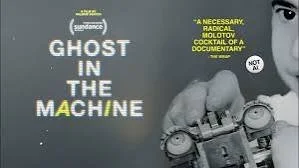
Director Valerie Veatch helps us dig into these questions in her latest film project “Ghost in the Machine” that premiered at the Sundance Film Festival earlier this year. I rented the film on Kinema and this post serves as my review (because if you know me, you know I have plenty of opinions on so-called “AI”).
Many have already asserted that “artificial intelligence” is a marketing term, and historians have reminded us that the term itself was arbitrarily chosen as early as the 1950s to loosely describe science and engineering pursuits of intelligence.
This documentary film helps the audience connect the dots from a history of artificial intelligence’s “scientific racism” to present-day, and possible future, of eugenics that is interwoven with capitalism, misogyny, and racism. She draws from interviews with many well-known and respected historians, computer scientists, social scientists, and tech critics to trace this history as well as to compile a trajectory of how certain, wealthy AI industry heads who make up this current Project of AI (Altman, Musk, Zuckerberg) have spent their time, money, resources into pushing for the AI infrastructure we see today.
While the primary context for the film of the present state of AI is the States, the film takes an international turn to highlight much of the human-involved work that keeps AI seeming as if it were actually autonomous and intelligent.
Exploited data workers are globally-situated, but overwhelmingly hired in less developed economies where they often earn low wages in return for long hours, in dire conditions, and doing essential work, such as content moderation, for Big Tech firms. Although this isn’t necessarily new information for those who have remained skeptical of Big Tech over the years and as these instances have been reported on increasingly, I do think it is important to continue sharing these stories until conditions change and also to pull back the curtain as to how Big Tech AI functions under the guise of autonomy. In the film, we hear directly from some of these exploited workers on the lack of promise in opportunity for jobs and also how content moderation of violent images they see on a daily basis sticks with them long after exposure and continues to impact their lives negatively.
However, I hope these people were properly compensated and provided with protections for their time on film, as they may risk being further reprimanded for speaking out. I also worry that we are continuing to exploit them as they tell us these stories and we take little action on these atrocities.
There were some other aspects of the film that didn’t sit well with me.
Throughout the film, a small “not AI” was glued to the top right of the screen, presumably to let the audience know what was being shown was, indeed, not AI-generated. However, my brain quickly disregarded this, and it was only after watching it a second time that I noticed some of it was actually “AI” and the disclaimer switched to notify us of that. But I didn’t notice. Maybe that was the point? That AI-generated content has become increasingly difficult to tell apart from non-AI generated content. The use of the disclaimer, when I noticed it, made a bit more sense to me after I made this realization as some scenes that featured red Koolaid seemed out of place and almost unnecessary. Clips at the beginning of the film that anthropomorphized Tay, the 2016 Twitter AI-chatbot, also looked eerie and out of place to me. Given the final recommendations of the film, I wish Veatch would have opted to not use AI at all. I think it would have made a bigger impact to pay and use an animator for these scenes and to emphasize how unnecessary AI is, especially in creative industries.
Speaking of the final recommendations of the film (SPOILER ALERT), for me, it felt short and ended abruptly with very little hope even though I think it was trying to offer audiences hope. Ultimately, the recommendations from the film on what we can and should do with this understanding of The Project of AI’s history and present-day indulgence of capitalism, racism, and misogyny, are to resist AI at an individual level and to not use it. But I don’t think that placing the burden on individuals is going to help much and it seems daunting and unrealistic when we still exist in capitalist, ableist, white supremacist societies. Not using AI (and I’m assuming it’s primarily talking about generative forms of AI, but this was also unclear) at all is becoming pragmatically harder to achieve. But we can make concerted choices and efforts in why we are using certain AI technologies and what benefits it serves.
A more indirect recommendation I took from this that I did like and wish was emphasized more, is one that asks us to think about what kinds of futures we want and whether it aligns with the future these eugenicists see for us (probably not) and then to collectively come together as part of a resistance and collective action for better futures.
I’m curious as to what types of people will actually be drawn to watch this film. Overall, I think the film is meant for those who already give so-called “AI” a big ol’ side eye of skepticism.

So, perhaps then, on the ground, in our everyday, maybe hope could look like sharing these ideas with our friends and family who have fallen under AI-hype, helping them understand what these technologies are, where they come from to better understanding what its limits are, and to get us all making more informed choices instead of blindly and uncritically using AI because it is easy, available, and “inevitable” (it doesn’t have to be).
If you are interested in reading more on this topic of eugenics and “AI”, I highly recommend this piece published in 2024 by Timnit Gebru and Emile P. Torres, “The TESCREAL bundle: Eugenics and the promise of utopia through artificial general intelligence”, although it’s written for primarily an academic audience.
I will leave you with lyrics from Sza and Phoebe Bridgers song “Ghost in the Machine” that was not at all used in the film being reviewed, but that I think is completely relevant:
I need humanity
Y'all lack humanity, drowning in vanity
Craving humanity
Y'all lack humanity, I need humanity
---
I hope you enjoyed this film review. I do not have a film background, but I do have a lot to say about so-called “AI”, so please forgive my avoidance of particular film techniques such as the random-seeming voice-overs that were used in some parts of the film (maybe it’s the ghost that’s referred to in the title???)
What did you think of the film? What did you take away from it and what will you leave behind? Let me know.